作り終えたいまは、出来上がりには満足しています。「ああすれば良かった」といった作り手としての細部への自己批判などよりも、完成してよかったなという安堵のほうが強いというのがほんとうのところです。参加いただいたフルート奏者の木ノ脇道元さん、ピアノのAiko Takahashiさん、ギターの村上達郎さん、そしてマスタリングを担当いただいた、自ら優れたアンビエント作家でもあるRafael Anton Irisarriさんに深く感謝しています。好き勝手を許してくれたOathのKubilay Yigitさんにも。
Making music with no regrets. On his new album EPILOGUE, Ken-ichiro Isoda goes beyond ambient
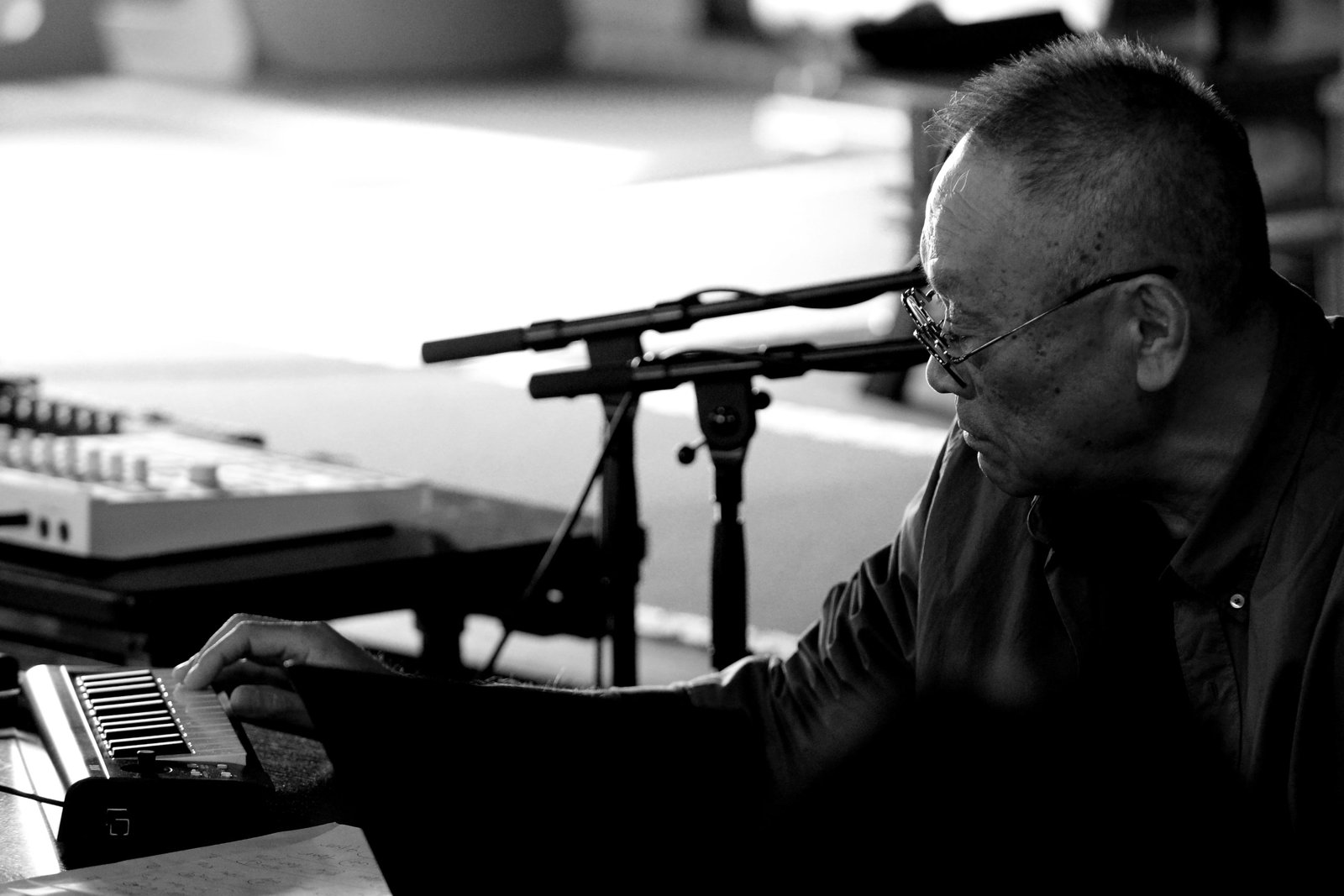
Photo: Shigeharu Isoda
I got the chance to talk a little with Ken-ichiro Isoda, who made pioneering environmental music in ’80s Japan. I’m really happy about it.
Isoda was born in Osaka in 1962. He released his first album, Oscillation Circuit, in 1984, and apparently Ryuichi Sakamoto once played "Nocturne" from it at an event. In the early ’90s he made six healing and new age albums, and after that he worked as a producer and composer, doing film music, Okinawan music and classical music.
It’s often said that around 2017, YouTube’s recommendations started bringing ’80s Japanese environmental music, like Hiroshi Yoshimura’s, to listeners all over the world. Like a lot of younger listeners, I found Isoda’s music in that wave, through the 2023 reissue of Oscillation Circuit. The album started when Isoda, while he was a university student, took the idea to Sound Process Design, the company founded by . It came out in 1984 on vinyl only, in about 300 copies, and for years it was a kind of phantom record among collectors. Nobuya Sugawa’s smooth saxophone winds around electric piano and organ, and it makes the view on my hard Berlin winter commute beautiful.
My favourite of his non-ambient work is Acoustic YMO, made in 2005 with his group The TOY BOX. It covers YMO’s whole first album without any electronic sounds, only acoustic instruments. With toy piano, xylophone and all kinds of percussion, its warm, toy-box sound feels so good. On 25 November it comes out on vinyl for the first time, and the full album will be on streaming services too.
This month, on 30 October, his new album EPILOGUE comes out on Oath, a label from Istanbul. Isoda lives on now, and he says he made this album to give shape to the side of his music that isn’t ambient or new age. After hearing the three songs already out, I was so moved that I couldn’t sit still, and I just wrote to him. He gladly and very kindly agreed.
Q1If you had to describe your music in a few words to someone who has never heard it, what would you say?
That's a difficult one. I'm known as an ambient and new age artist, but for most of my professional career I've been a recording producer and a composer. In my work, I've handled everything from classical and contemporary music to folk music and rock bands. As a composer, too, I've written everything from new age to large-scale wind orchestra pieces and film scores. So what people know of me now is only a small fragment. Whatever the genre, I'm happy if people feel it however they like and use it however they like.
For anyone interested, here is my career history (automatically translated by the site).
Q2What kind of album is EPILOGUE? Why did you call it EPILOGUE? And when or where would you like people to listen to it?
After reissuing Oscillation Circuit in 2023, I released past ambient and new age work three years in a row: Majel's Slumber in 2024, a re-recording of my '90s new age work, and Beach of the Pliocene in 2025, a compilation of my '90s work. But all of these were passive projects, released because there was demand for them. For me, they were things I put out because I wanted listeners to enjoy them. I made Interwoven, too, wanting to learn from , whom I deeply admire.
EPILOGUE is a record I made because I felt I couldn't only do passive work. Side A is put together so it reaches my existing listeners, but Side B includes electronica-style vocal numbers and chamber music written in a classical idiom for film. As I said in my previous answer, I started making it because I felt that if I didn't give shape to the side of me that isn't ambient or new age, I would regret it when I die. "EPILOGUE" is a piece I composed for a film twenty years ago. I placed it at the end of the album, and used it as the album title with the meaning I've just described.
Side A is meant to be played freely, at any time of day and in any space. The same goes for Side B, but personally I'd like people to listen to it quietly, late at night.
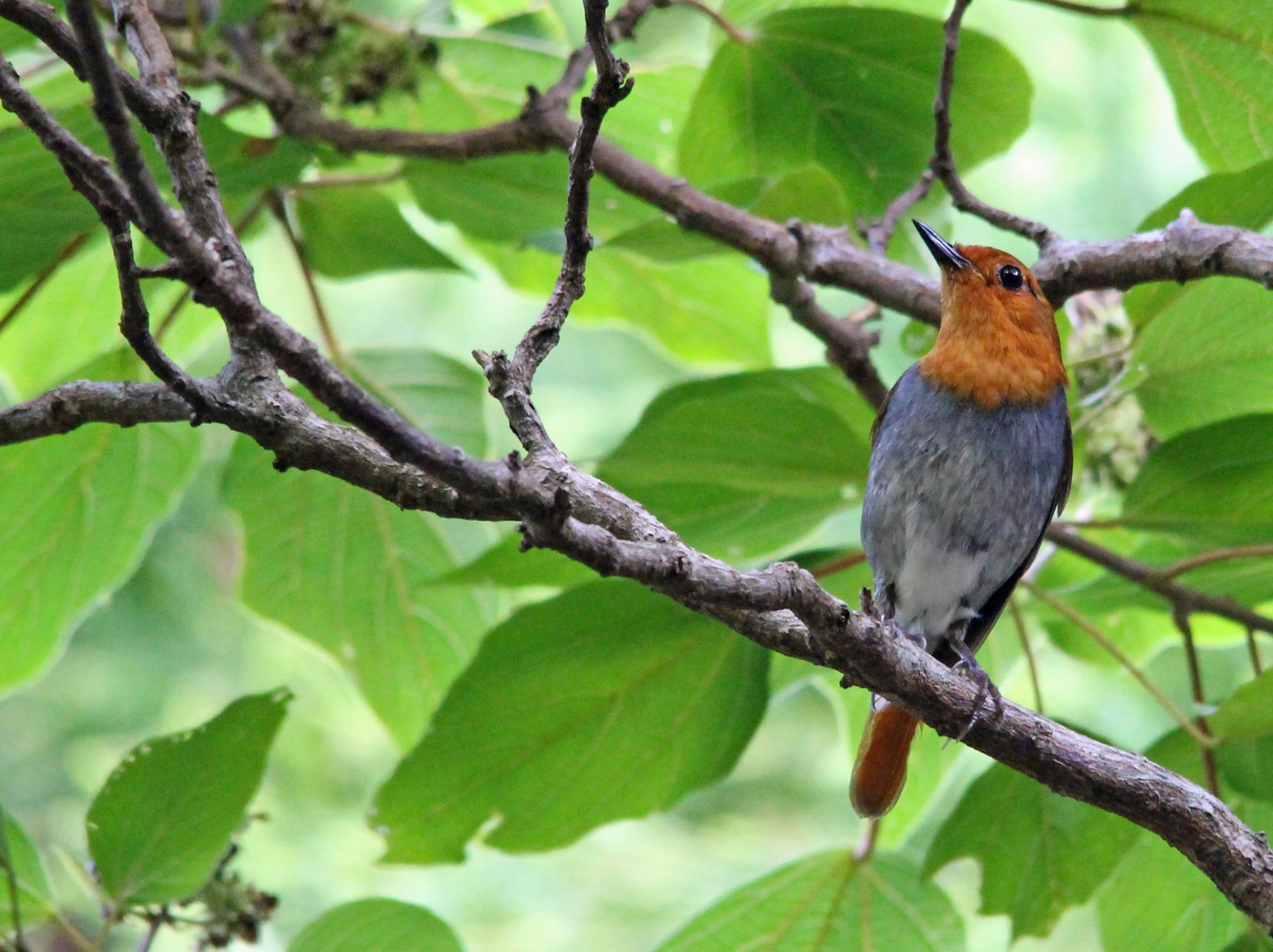
Q3The first track, "TANEKOMA," has the voice of the Izu robin, recorded in the mountains on Hachijō-jima. What kind of bird is it for you? Do you have any memories of it on the island? And why did you put this track first?
My wife, a veterinarian (I studied veterinary medicine at university, too), retired from her work and wanted to enjoy birdwatching, which she loves, so the two of us moved to . The island is home to many rare birds, including the Izu thrush and the Japanese wood pigeon, which are protected as natural monuments. The is one of them, but unlike the European robin, it rarely shows itself. You can only know it's there from its distinctive song.
Izu robin (Photo: Kanako Isoda)
I originally wrote this piece as part of a charity project for climate change and natural disasters. But the typhoons of 2025 caused severe damage to Hachijō-jima, and the mountains where the Izu robin lives were badly hit. They are still closed to the public. We have no idea how the robins are living now.
That's why I placed this track at the start of the album, with my hopes for the day I can meet them again.
For more about the typhoon damage, please see my blog.
Q4This year you also released Interwoven with aus. What is it like for you to make music with younger musicians? And how did it feel to have 's voice on the fourth track, "STEPS"?
I grew up in recording studios, small live venues and concert halls. When I make music, I write scores. aus comes more from club culture, so he has approaches and ways of thinking that I don't, and I learned a great deal from him.
I specifically asked Sonoda to take part. The way the lyrics of "STEPS" are written, like pointillism made of single words, was inspired by "Chronograph," a song by Sketch Show, the duo of Haruomi Hosono and . I asked Sonoda because I felt that he, also a writer, was the only vocalist who could give these fragmentary lyrics meaning and lyricism. The result went beyond my expectations, and I'm very happy with it.
Q5Could you tell me some ambient music you've been listening to a lot lately? Old or new, anything is fine.
First, the works of , the 14th-century French composer, who could be called a distant ancestor of ambient music. These works were designed to fill the churches of his time with pure, clear air through simple, clean melodies and harmonies, and they only truly exist together with the church's reverberation. I think they are works one hundred percent attuned to space and environment.
They're not pure ambient, but Haruomi Hosono's Yours Sincerely and maya ongaku's Nothing Space Music, two albums released this year, are rare masterpieces. You can feel ambient thinking underneath them, colouring the music.
Q6Before you started, you said you made it so you wouldn’t regret it when you die. Now that it’s finished, how do you feel? And “epilogue” means the final chapter. For you, is this album a closing, or the start of something new?
When I first decided to make it, I think the strongest feeling was simply that I had to get it made, no matter what. Besides my age, there may also have been something close to an obsession, rooted in the huge typhoon disaster that left me unable to see what lies ahead (and that feeling is still there).
Now that it’s finished, I’m satisfied with how it turned out. Honestly, more than any self-criticism over details as a maker, the “I should have done that differently” kind, what I feel most is relief that it’s done. I’m deeply grateful to flutist Dogen Kinowaki, pianist Aiko Takahashi, guitarist Tatsuro Murakami, and Rafael Anton Irisarri, who did the mastering and is a wonderful ambient artist himself. And to Kubilay Yigit of Oath, too, for letting me do things my own way.
I’d be happy even if this were the end, just as the title says.
That said, makers are sinful creatures, and it’s also true that I’m starting to feel there are things I’ve left undone. With climate change threatening daily life itself, though, I don’t know whether I’ll be able to start making something again.
After the interview
A lot of younger listeners probably know Isoda as an ambient and new age artist. But as he says himself, "what people know of me now is only a small fragment." On the new album you can hear sides of him beyond ambient. Please give it a listen.
Of the three songs already out, two are beautiful ambient pieces. On "," flute, vibraphone and melodion play a sad, gentle melody, and I especially love the moment the flute comes in. Now and then, the Izu robin's voice comes in.
According to Isoda, "" started as an ambient demo from the '80s, recorded on a four-track cassette with his brother's guitar. For the album, Aiko Takahashi added piano, Isoda layered vibraphone on top, and he edited it all in an improvised way. In his words, it's the oldest and also the newest ambient piece on the album. The piano has a beautiful soft, hazy sound, like a felt piano.
The electronica-leaning "" has Sonoda singing single words one by one, like "close your eyes," "open," "close," "far," "near," "sleep." They are just separate words, but put together they bring up a scene and a feeling. Underneath, a glitchy beat pans from left to right and tickles your ears in a really good way.